
San Jacinto County Arrest Warrants Explained
An arrest warrant, under Texas Code of Criminal Procedure Chapter 15, is a written order from a magistrate telling a peace officer to bring an accused person into custody. Where the paper trail lives depends on the court. San Jacinto County keeps its records with the issuing court, the clerk, and whichever agency was assigned to serve the order. The court category matters when you go looking. District cases run through the 258th or 411th District Court and the District Clerk. Class A and B misdemeanors belong to County Court, with paperwork at the County Clerk. Justices of the peace and municipal judges handle the cases within their own authority. No county page posts a full arrest-warrant roster, so a warrant search means calling the right office for the case.
San Jacinto County Arrest Warrant Rules
Chapter 15 of the Texas Code of Criminal Procedure lays out what an arrest warrant must contain: the name or a description of the person, the offense charged, and the magistrate's signature and office. The complaint and its supporting affidavit supply the sworn basis for issuing it. A public copy, though, should stay lean. It should not expose protected affidavit details. San Jacinto County's public pages offer no sample arrest-warrant record, so the statutory fields show only what the instrument addresses, not what any particular file holds. The clerk or the court can tell you which parts of a given file are open. An active investigation, a juvenile matter, or a sealed case may carry extra limits. Texas Code of Criminal Procedure Chapter 15 sets the statewide framework every warrant here follows.
Read the current Texas Code of Criminal Procedure Chapter 15 for the legal text.
San Jacinto County Arrest Warrant Issuers
An arrest warrant can start with an investigating agency and pass through a magistrate or court before the sheriff's office takes on service. The path matters. Felony cases often land in the 258th or 411th District Court records later, and those courts are separate from the office that actually makes the arrest. The District Clerk is the county contact for felony and district criminal files. A record request there, however, is not a real-time countywide warrant check. If you know the court or the charge, identify that issuer first. The San Jacinto County Sheriff's Office answers questions about county service, and the issuing court can confirm a warrant's current status and the related cause.
Inside a San Jacinto County Arrest Warrant
A San Jacinto County case file can hold the warrant itself, the complaint, docket events, the service return, and later bond or recall records. No individual sample is reproduced here. The table draws on statutory and docket fields to show what to ask about, not what every county webpage displays. One caution: confirm status with the issuing court, and ask when the record was last checked.
| Case identifier | No public sample released Ask the clerk for a file number. |
|---|---|
| Person description | Name or description required by statute; protected details may be withheld. |
| Offense | Offense listed in the process; it is not a conviction. |
| Issuing magistrate | Identifies the judicial officer who signed or authorized the order. |
| Service return | Records whether an officer served or returned the process. |
| Bond / status | Ask about current bond instructions and any recall, quash, or service event. |
San Jacinto County Arrest Warrant District Courts
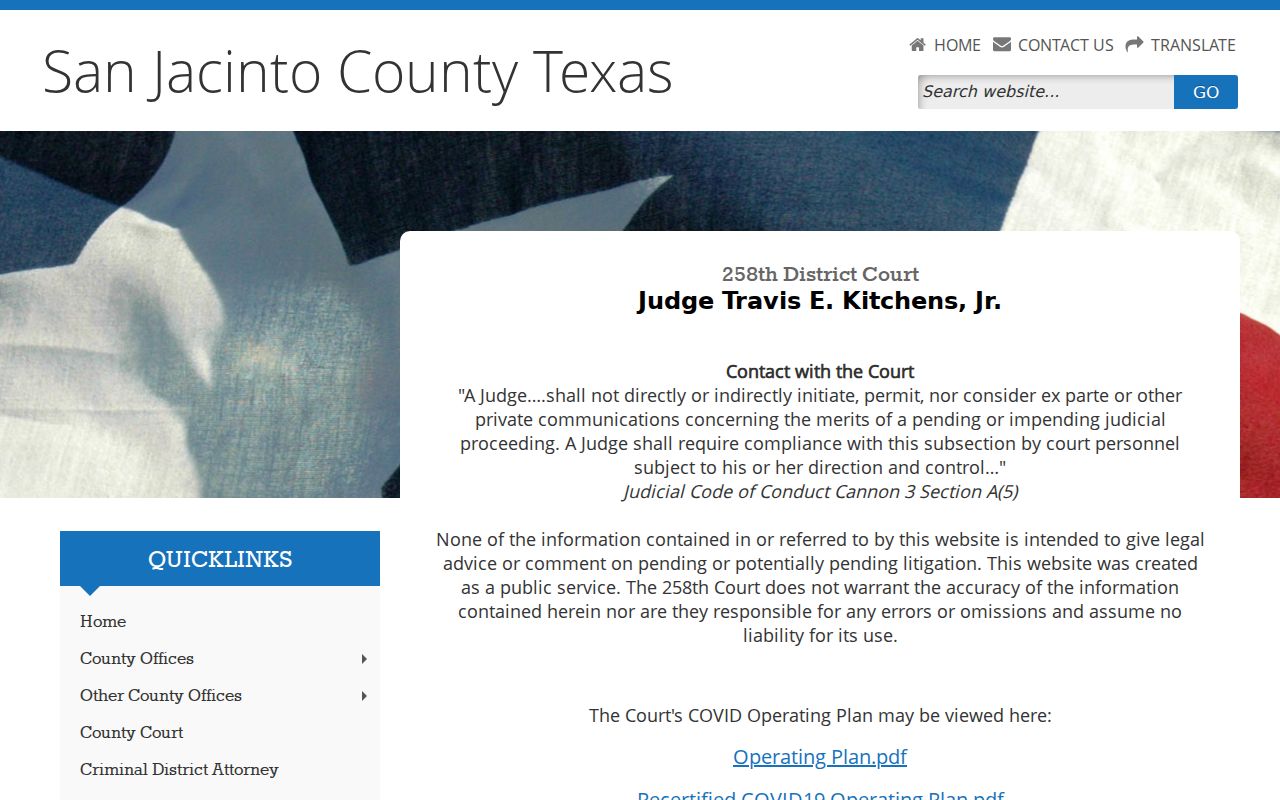
The 258th and 411th District Courts handle felony criminal matters for San Jacinto County, and both share courthouse settings there. The District Clerk keeps their records. A clerk file can show the case, while the sheriff or a constable holds the execution return, and one system may not show both parts. For a 258th Court matter, the court page gives its courthouse route and points copy requests to the District Clerk, which does not accept record-copy requests by email. For a 411th matter, use that court's contact route and the District Clerk for the case file. The 258th District Court publishes its contact route.
The 411th District Court also hears county matters and publishes its own contact route.
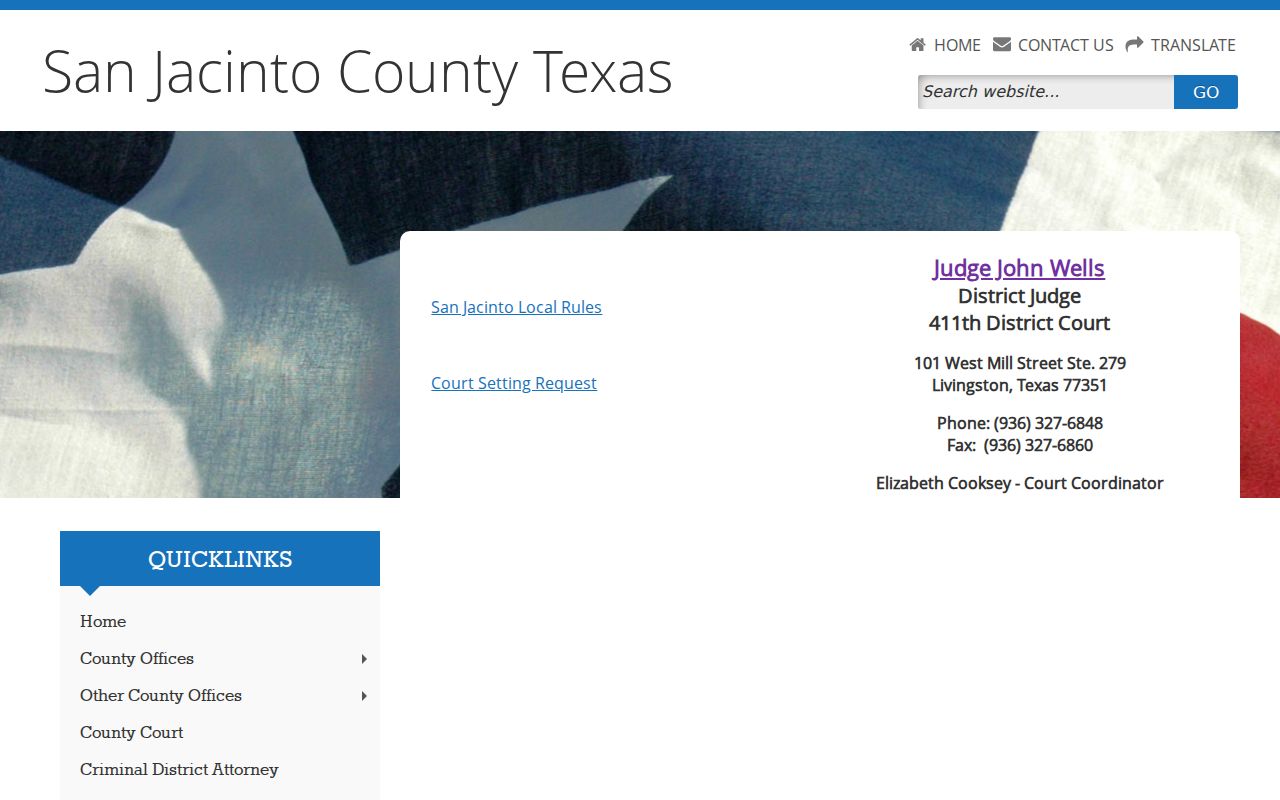
Pair court information with the District Clerk's route for the case file.
Serving Arrest Warrants in San Jacinto County
The Sheriff's Office, four constable precincts, city peace officers where applicable, and other Texas peace officers may all serve process in San Jacinto County. The county directory notes that constables serve warrants and civil process and act as bailiffs for the JP courts. No single warrant-unit roster exists, and no office guarantees which agency holds a particular order. Ask the issuing court and the sheriff which office can confirm execution status.
San Jacinto County Sheriff's Office
75 W. Cedar Ave., Coldspring, TX 77331
(936) 653-4367
Constable Precincts
Four offices handle court and civil process.
P1 (936) 653-5614
P2 (936) 628-1439
San Jacinto County Arrest Warrant Service Records
The County Clerk holds County Court criminal records in San Jacinto County, and the District Clerk holds the 258th and 411th District Court records. The two files don't always match. A docket may show that a warrant was issued while the later return, service, or recall sits with the serving agency, so ask both offices when the answer affects what happens next. For County Court misdemeanors, use the County Clerk's official record route. For felony matters, use the District Clerk and name the district court. Neither office publishes a full countywide active-warrant roster. Juvenile and active-investigation records may be restricted under Texas law. The District Clerk page explains its portal and copy-request limits.
Comparing Arrest, Summons, and Bench Warrants
A summons tells a person to appear, while an arrest warrant authorizes custody under its terms. "Bench warrant" is public shorthand for court-compliance process, and it may appear under a different formal name. In San Jacinto County, read the instrument and ask the issuing court what action it requires. See the bench-warrant process for that route.
| Feature | Arrest Warrant | Summons | Bench Warrant |
|---|---|---|---|
| Common basis | Complaint or other lawful warrant basis | Direction to appear in court | Missed setting or court-compliance issue |
| Primary route | Issuing magistrate and serving agency | Court listed on the summons | Court controlling the pending case |
| What it directs | Officer to take a person into custody | Person to appear on the stated date | Appearance or arrest under court process |
| Next step | Ask about status, appearance, and bond | Follow the date and court instructions | Ask whether recall or a hearing is required |
San Jacinto County Federal Warrants
Federal warrants sit outside San Jacinto County's clerk and sheriff systems. A local warrant search cannot reach them. San Jacinto County sits in the Southern District of Texas, Houston Division. PACER is the official federal case-record route. Sealed matters may not appear, and fees can apply. No county office can confirm or clear a federal order, so take status questions to the proper federal court, the U.S. Marshals, or a licensed attorney. CourtListener and RECAP give free docket material, but coverage is incomplete and sealed records stay off them. The Southern District of Texas page describes the Houston Division's public-access route.
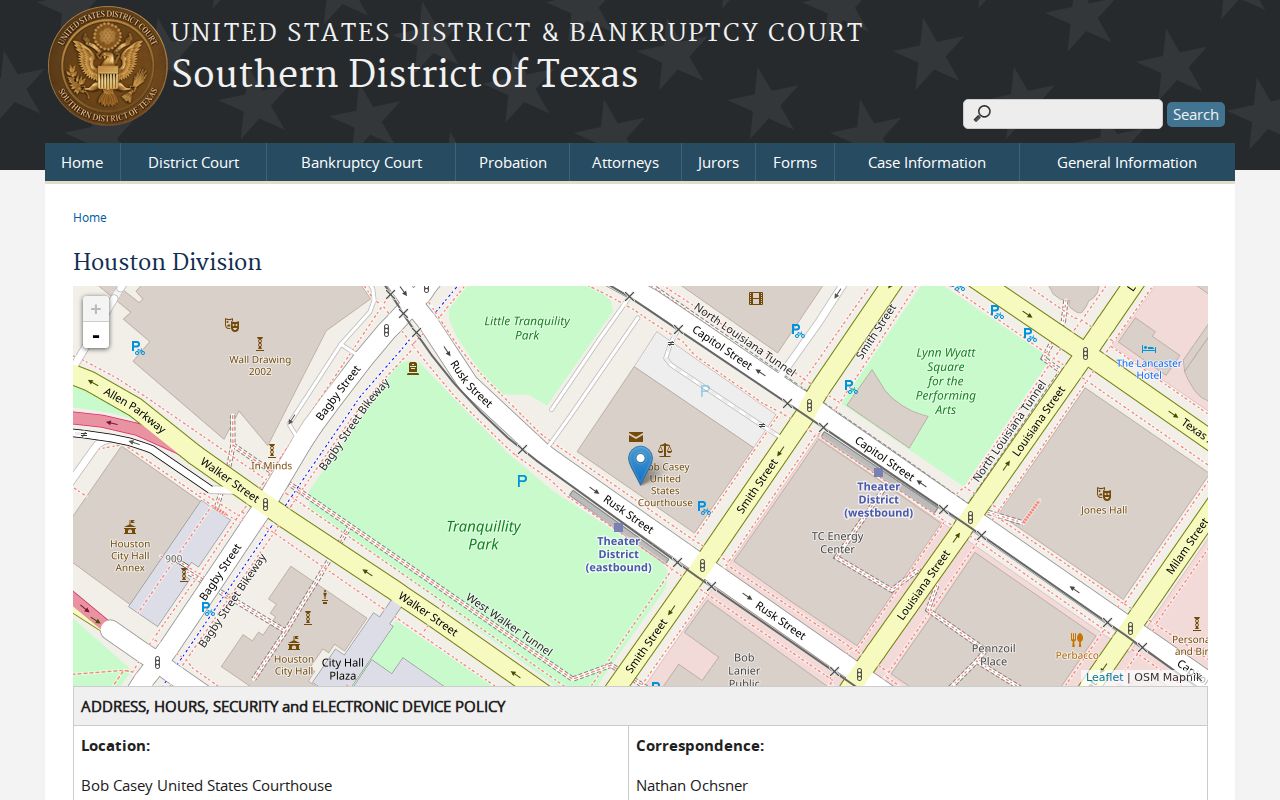
For San Jacinto County federal matters, turn to the Southern District of Texas Houston Division. PACER's public pricing page explains current federal-record fees.
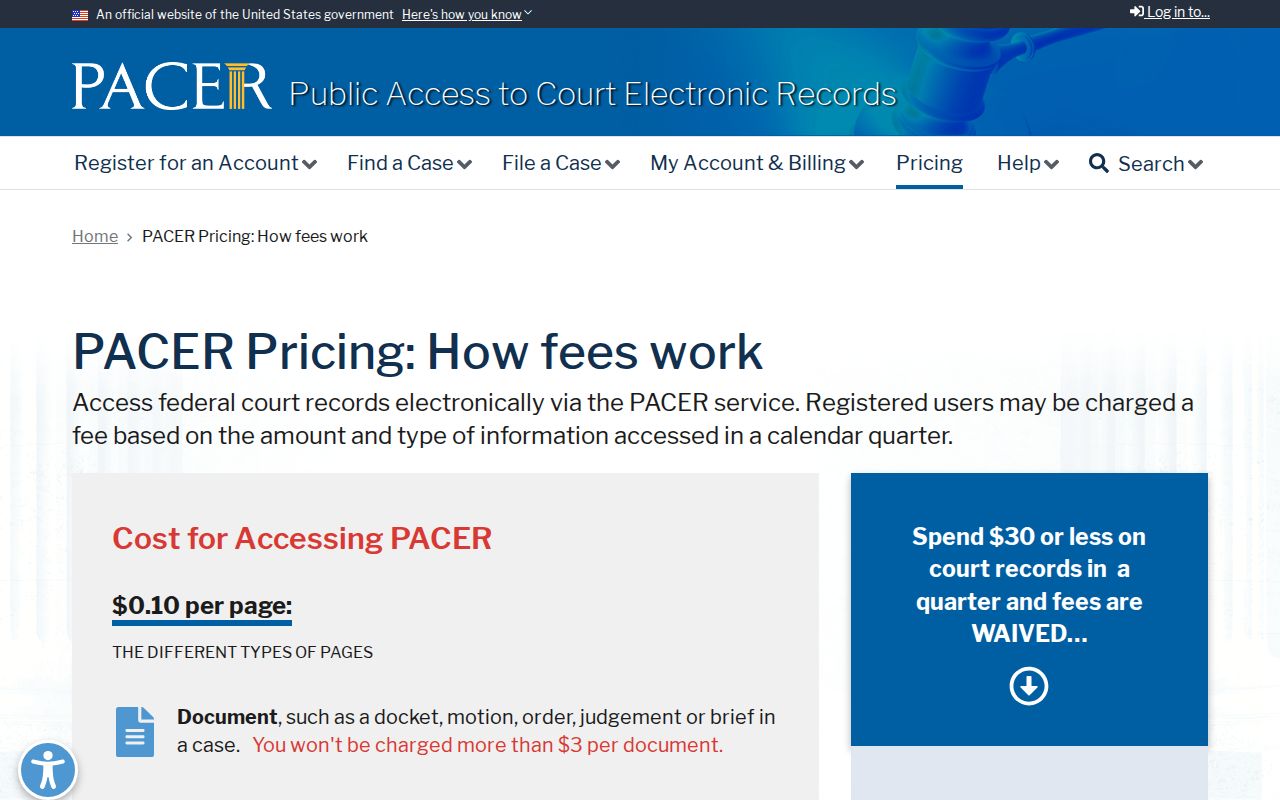
Check PACER's current pricing page before searching.
If There's an Arrest Warrant for You
Call the issuing court first. Ask what process is on file, whether the order remains active, and whether you must appear in person. A licensed attorney can help with a planned appearance, bond, or a motion to recall or quash. San Jacinto County posts no surrender hours. No warrant-specific bond window exists either. So call before you visit any office. When a court recalls, quashes, or satisfies an order, get it in writing. Keep that paper. If the sheriff also keeps service information, ask how that office receives the update. A payment receipt or old docket entry cannot prove that every record changed.
Important: Do not visit an office without first asking about the order and the proper route. Get case-specific guidance from counsel.